Direct booking vs OTAs in 2026: the real cost of each channel
The illusion of free direct sales
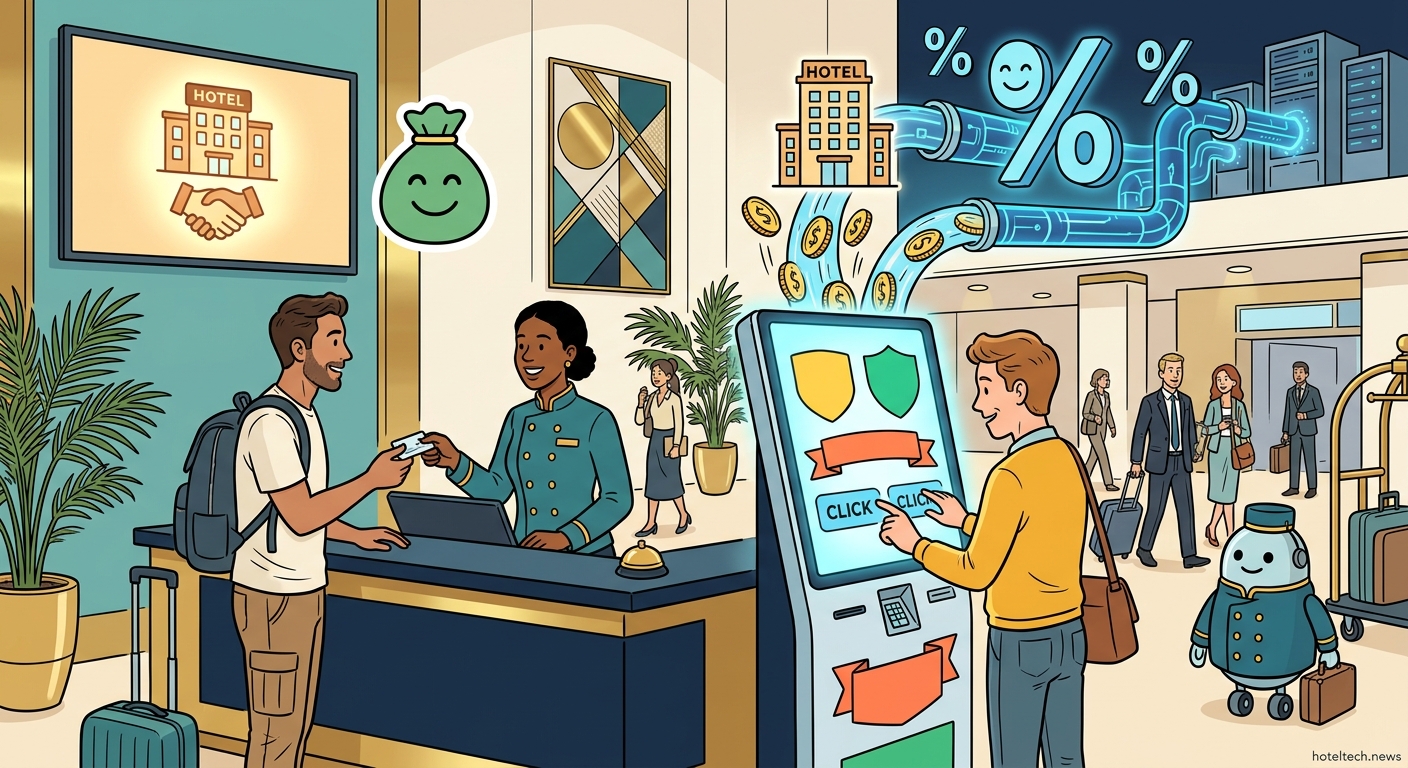
You've heard it for years: direct bookings are "free." You don't pay commission. It's your future. True, you don't write a check to Booking when someone reserves on your site. But here's the uncomfortable question: how much did it cost you to get them there?
An OTA customer arrives with purchase intent already formed. They're in the market, searching for hotels, wallet open. The OTA surfaces your property in context. That's why you pay commission: 15% to 30% of the room rate. It stings. But it's variable cost, tied to sale. You don't pay if it doesn't sell.
A direct customer has to discover you first. Through Google, social media, email, retargeting campaigns. Those are fixed costs. Monthly spend. Add it up: Google Ads, Meta, email marketing, SEO, web design, hosting, certificates, maintenance. A small chain spends between €2,000 and €5,000 monthly to keep their booking engine visible and attracting organic traffic. A mid-size group, double or more. And that barely generates 20% of total bookings.
The hidden cost: tech and friction
Direct selling requires tools. A decent booking engine costs €300 to €1,500 monthly, depending on features. Add integrated PMS, revenue management, channel manager to sync with OTAs and prevent overbooking. Payment methods, gateways, fraud detection, solid hosting.
Then there's friction. A visitor landing on your site must create an account, enter data, choose room, pay. On OTA, Booking already has their wallet saved, travel history, reviews. Converts easier. Your web conversion rate is almost always lower than OTA. That means of every 100 visits you pay for in traffic, you close 2 or 3. Of every 100 guests seeing your hotel on Booking, you close 8 or 10.
The real math: what costs more
Let's put numbers to it. A 60-room hotel, 70% average occupancy, €120 average daily rate.
Pure OTA option:
- 60 rooms × 0.70 × 30 days = 1,260 nights sold per month.
- At €120, that's €151,200 revenue.
- Average commission 22%: €33,264 in commissions.
- Distribution cost: 22% of revenue.
Pure direct booking option:
- Same volume, same rate: €151,200 revenue.
- But to achieve it, you need: €3,000 Google and social + €1,000 tools + €500 maintenance = €4,500 fixed monthly.
- Plus: lower conversion means you need €5,000 more in extra traffic to close the same volume.
- Total cost: €9,500 monthly, which is 6.3% of revenue.
On paper, direct wins. But here's the missing piece: direct bookings require amortized customer acquisition cost (CAC). If average customer lifetime is 2 years and they book 3 times, real CAC per booking nearly matches OTA commission. Some industry research suggests you end up paying 12% to 18% in total distribution costs when you add everything up.
The smart option: calculated blend
It's not about picking sides. Most hotels running well in 2026 work both channels. But watch your mix carefully.
For a hotel with weak brand or no customer base: Start with OTA (Booking, Expedia minimum). Volume is secure. Then invest in direct once you have stable occupancy. Build customer base, email lists, reviews. It's the proven path.
For a hotel with strong brand or existing base: Invest in direct from day one. You have returning customers, brand recognition. CAC is low because many bookings are repeat. OTAs become complement, not lifeline.
For both scenarios: Optimize the mix dynamically. High season, boost OTA budget: commission on a €200 night still beats spending €10,000 on ads. Low season, invest in direct: that's when CAC makes sense.
My take
The "direct vs OTA" debate is false. Real channel cost is far more complex than it sounds. OTAs are expensive but guarantee volume. Direct is cheaper percentage-wise but demands upfront investment and patience. In 2026, winning hoteliers don't choose: they calibrate the mix based on occupancy, brand strength, and execution capacity. Calculate real CAC, review quarterly, shift budget toward what performs. That's what separates the optimized from those just paying.
Quick questions
What is the real cost of a direct booking once you add everything?
What is the ideal distribution mix in 2026?
When does direct booking investment pay off?
Companies
The hotel tech and travel tech companies we follow, plus the ones surfacing in today's news.
- In today's news
- DuettoRMS cloud que popularizó el open pricing: precios por segmento y canal en tiempo real en lugar de BAR fijo. Fuerte en cadenas, casinos y hoteles con estrategia comercial agresiva.
- IDeaSEl veterano del revenue management científico, propiedad de SAS, con pricing automatizado desplegado en decenas de miles de hoteles. Si un hotel se toma en serio el RMS, IDeaS siempre está en la shortlist.
- ApaleoPMS API-first alemán pensado como plataforma abierta: el hotel compone su stack conectando las apps que quiera sobre un núcleo ligero. Ideal para grupos con operativa digital y marcas lifestyle.
Was this article useful?
The daily brief
The hotel tech brief, in your inbox
PMS, revenue, distribution, AI and travel tech startups. One sharp email a day. Free.
The brief hoteliers who buy technology read every morning.
Editorial content by Hotel Tech News. It may contain errors. Verify anything important with the original source.
This article may mention third-party products, companies or services for informational purposes. Hotel Tech News does not endorse them and is not responsible for them or for what they offer. Editorial content curated by the Hotel Tech News team.