Google AI Mode books hotels, Lighthouse Ernest Crews, direct bookings vs OTA costs
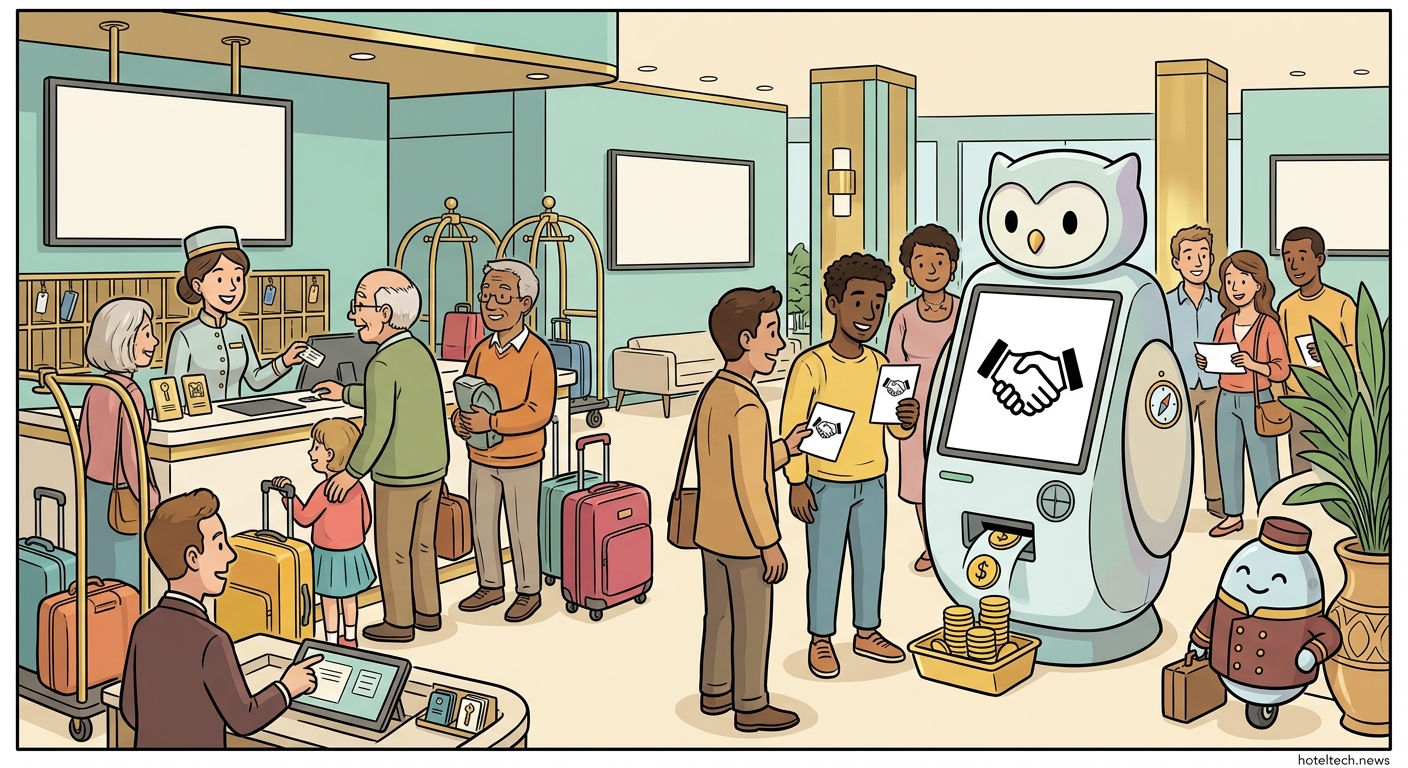
The future of hotel distribution just got a little more direct. Google's AI Mode now facilitates hotel bookings with partners like Choice and Hilton, while Lighthouse aims to solve the sector's AI adoption problem with a new 'crew' service. Both moves point to a reality hoteliers can no longer ignore: the path to the guest is becoming conversational, and the technology is ready even if the industry is not.
Yesterday's Highline Hospitality bets on Otelier to feed its AI showed a property group betting on AI to drive its analytics. Today, we see the same wave hitting both distribution and hotel operations. Google's move, in particular, transforms AI from a planning tool into a transactional channel, creating a new and potentially significant cost center for hotels on the other side of that booking.
Today's brief
Google's AI Mode is now a full booking channel, not just a search tool. According to Hotel Dive, the conversational search feature lets guests book directly with partners including Choice Hotels and Hilton. This is a pivotal moment where the AI assistant stops being a mere meta-search referral and becomes a transactional intermediary.
- Travellers increasingly use AI for trip planning, and Google, with its vast search data and Gemini technology, is uniquely positioned to shape that behavior.
- For hoteliers, this means new distribution logic: a booking made through AI Mode may bypass traditional funnel steps, changing the rules around direct vs. OTA bookings and associated costs.
- The key question for hotels is whether AI Mode becomes a 'direct-ish' channel at lower cost or a new OTA-like fee structure. Right now, that cost structure remains unclear.
My read: this could revolutionize the booking experience, but hoteliers must monitor the commission and data ownership aspects closely. It's a new kind of partner, and the partnership terms are not yet standard.
Hotel tech
Lighthouse takes on the AI adoption problem with a hands-on service. According to Hospitality Net, Lighthouse has launched Ernest Crews, a service where AI and tech specialists embed within hotel commercial teams for 30 to 60 days to deploy its Ernest AI teammate. This is a direct response to low adoption rates cited in its own 2026 survey.
This is a practical and refreshing approach. The problem is not always the technology, it is the organizational change management and training to effectively use the tools.
- The offering targets the 'last mile' issue: having sophisticated AI is useless unless the revenue manager and sales teams really use it daily.
- For vendors, this underscores the shift from selling software to selling outcomes and guidance, a trend that hotels should leverage in their negotiations.
- For hotels, this 'crew' model is a low-risk trial but also highlights the internal skills gap that must be addressed to fully capitalize on AI.
This direct, consulting-driven approach could be the missing link. It acknowledges that the hotel's real challenge isn't buying AI, but embedding it into daily workflows.
Revenue and distribution
Direct booking tactics remain the sector's main defense against OTA costs. Hotel News Resource published a piece by Laure Cremers outlining 12 practical methods for increasing direct bookings and reducing commission costs. This is classic revenue strategy, but the context of Google's AI Mode launch makes it more relevant than ever.
The urgency is real. With AI potentially changing guest behavior, a hotel's brand website must be more than a booking page, it must be a compelling, user-friendly destination.
- Tactics like exclusive member rates, value-added packages, and meta-search bidding are known but require constant discipline to execute.
- The real competitive edge now lies in first-party data and personalization, which requires investing in a robust CRM and a website that can deliver a truly tailored experience.
- Every percentage point of commission saved goes directly to the bottom line, financing more efficient and targeted growth strategies.
This is the hotelier's permanent struggle, but the tools to win it are advancing. AI makes these strategies more effective through better data analysis and personalization.
AI in hospitality
The debate on AI's role is evolving from a cost-saving tool to an ethical and workforce question. The Hospitality Net podcast titled 'The Turndown Service' probes AI warnings from Bill Gates and Pope Leo XIV, alongside China's robot culture, to assess AI's impact on hospitality's workforce and human-first identity.
These are not abstract questions. They are about the ROI of your payroll and the very reason a guest chooses a hotel over an apartment.
- The industry's 'high-touch' nature means AI should be deployed to enhance human service, not replace it. The conversation should be about freeing up staff time from mundane tasks to deliver genuinely memorable experiences.
- Every hotelier should have strategic clarity on this: what is your AI philosophy? This blog post from yesterday continues this thread, showing how AI can power analytics without losing the human touch.
- The result is a more productive, engaging workplace that translates directly into better guest reviews and repeat business.
The sector's unique strength is its human element. AI is not a substitute, it's the tool that makes the human touch financially sustainable.
What we are watching
- The real cost structure of Google AI Mode: How commissions and data are handled will set the precedent for future AI distribution channels.
- Adoption rates of Lighthouse's Ernest Crews: Will this consulting model become a new industry standard for onboarding AI?
- The direct booking playbook: Which of the 12 tactics will gain new relevance in an AI-driven world, and which will become obsolete?
Startups and funding
- Lighthouse (London): The company behind the commercial AI platform, Ernest, has launched Ernest Crews, a service to embed AI specialists in hotels to accelerate adoption and value realization.
Markets
No specific market-moving data available today.
Closing thoughts
The conversation around AI has shifted. Google is making AI a channel, and Lighthouse is making AI an employee. Hoteliers who understand these fundamental changes and adapt their strategy around them will be the ones thriving as the distribution and operational landscape shifts under their feet. There is no threat on this horizon, only a new set of tools and rules to master.
Quick questions
What is Google AI Mode for hotel booking?
Why is Google AI Mode important for hotels?
How does Lighthouse's Ernest Crews work?
What are the key strategies for direct bookings?
What are the risks of AI in hospitality?
Companies
The hotel tech and travel tech companies we follow, plus the ones surfacing in today's news.
- In today's news
- LighthouseHa lanzado Ernest Crews, un servicio que integra especialistas en IA en los equipos comerciales de los hoteles durante 30-60 días para acelerar la adopción de su agente Ernest.
- niikiisPlataforma de guest experience y gestión de personal hotelero que pone el foco en la retención del talento para ganar la batalla operativa diaria.
- Choice HotelsCadena hotelera que se convierte en uno de los primeros grupos en vender habitaciones a través de AI Mode de Google, abriendo un nuevo canal de distribución.
Was this article useful?
The daily brief
The hotel tech brief, in your inbox
PMS, revenue, distribution, AI and travel tech startups. One sharp email a day. Free.
The brief hoteliers who buy technology read every morning.
Editorial content by Hotel Tech News. It may contain errors. Verify anything important with the original source.
This article may mention third-party products, companies or services for informational purposes. Hotel Tech News does not endorse them and is not responsible for them or for what they offer. Editorial content curated by the Hotel Tech News team.