Hotel connectivity, AI distribution, Innspire and The Elser, AI Hospitality Alliance, hybrid operations
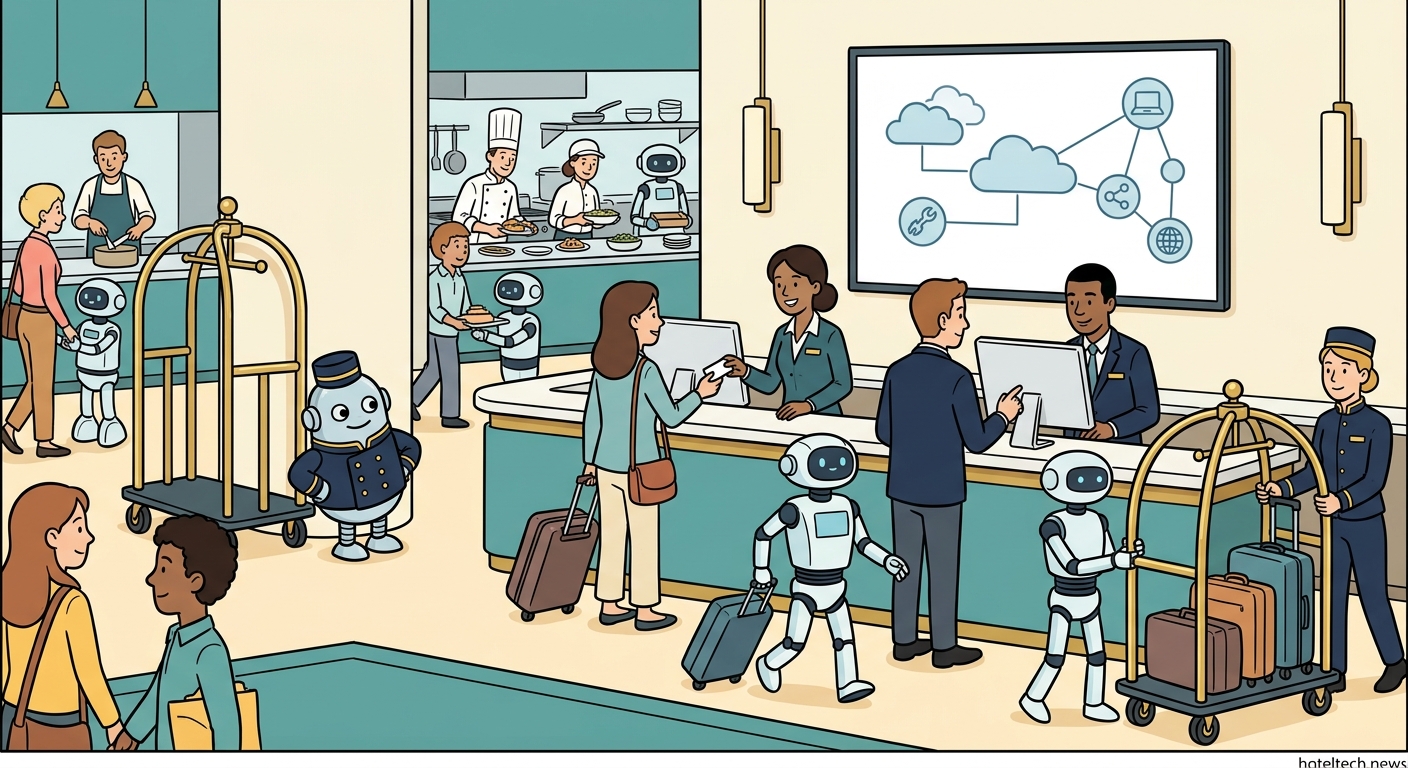
Hotel connectivity has just shifted status: from neutral infrastructure to the hard line separating those who can access AI-driven distribution from those left behind. Clean data flow between PMS, channel managers, and booking engines is no longer optional. This reshapes buying criteria for hotels and breaks assumptions we thought were fixed.
Connectivity as the gate to AI distribution
Connectivity itself isn't new. What's new is that it's no longer a luxury, it's now the line in the sand. According to Hospitality Net, this is the core industry debate right now: platforms like Cloudbeds are clear that AI-powered pricing and distribution algorithms cannot work without real-time integrated data.
Meanwhile, Simone Puorto of Cloudbeds raises an equally uncomfortable point: most hotels run too much software they don't actually use. The sector is drowning in tools with zero real adoption. So the filter isn't just having connected data, it's choosing which technology actually delivers.
For hotel buyers, this means two things: first, audit your stack architecture now, because if your PMS and RMS don't talk seamlessly, you're already out of the AI race. Second, aim for end-to-end integrated platforms, not scattered point solutions.
Innspire brings AI guest experience to luxury with The Elser
The Elser Hotel & Residences, a 49-story luxury tower in downtown Miami, just launched The Elser App in partnership with Innspire, an AI platform for guest engagement and hotel operations. The app centralizes reservations, check-in, in-room services, restaurant bookings, and amenity access with AI-driven contextual logic.
What matters here isn't that another guest app exists. It's that AI personalizes what shows and in what order based on guest profile and stay stage. During onboarding, it recognizes preferences and anticipates friction points. This is guest experience that costs money, but translates directly to satisfaction scores and incremental revenue per service.
For owners and directors, Innspire proves AI is working in production in luxury right now. If you're an independent or boutique chain, this sets the level expected in 18 months. It won't be a differentiator soon, it'll be baseline.
54 companies form AI committees with shared standards
The AI Hospitality Alliance has launched eight workstream committees to build a shared AI roadmap for hospitality. Hotel News Resource reports that 54 contributors from 32 companies are collaborating on shared frameworks, technical standards, and implementation blueprints.
This matters. It's not another talk shop: it's the industry saying "we need a common language for AI." The committees span distribution, operations, data security, and guest experience. When these frameworks close, they'll set minimum standards that condition what software you buy and how it integrates.
As a hotel tech buyer or ops leader, watch these frameworks closely, because they'll determine which AI integrations work with which PMS or RMS. If your vendor isn't in the alliance, ask why. What works standalone today has to work connected tomorrow.
Allegiant breaks its direct-only dogma with Expedia
Allegiant Air just signed an exclusive deal with Expedia, abandoning its historic "direct distribution only" strategy. Skift is blunt: just five months ago, in February 2026, Allegiant was selling its OTA resistance as competitive advantage. Today it signs away.
Why this matters to hoteliers: if Allegiant, the anti-OTA bastion in airlines, now accepts that distribution control is a myth, that sends a clear signal. OTA integration isn't optional, it's mathematics. Expedia's data and reach matter more than the illusion of channel control.
For hotels, the lesson is stark: you can't escape OTAs with a stance. What you can do is negotiate connectivity, commission rates, and data access. Allegiant learned it late, but it learned it.
Hybrid operating models for 2030
HVS brings together leaders from Hyatt, LR Hotels, and Westmont in a webinar to debate how operating models evolve. The consensus: it's not full AI automation or full human, it's a mix of flexible contracts, AI-driven distribution, and human-centered experience.
The reality is 2020 models don't fit 2026. Hyatt and peers are redesigning how they hire staff, how they delegate decisions to AI (pricing, resource allocation), and where they insist on human touch (conflict resolution, experience design). For hoteliers, this means your PMS can't just be a ledger: it has to be the nervous system that offloads operational decisions to AI but keeps humans where they generate difference.
What we're watching
- AI Hospitality Alliance framework closures (next 8 weeks): when final standards drop, there will be movement in the PMS and RMS market, with vendors adapting integrations.
- Innspire adoption beyond US luxury: if guest app AI spreads fast into boutique chains, directors need to budget now.
- Forced OTA integrations in hotel software: if Allegiant sets the trend, more chains will accept OTA exclusivity, reshaping how distribution vendors are negotiated.
- Low-connectivity independents shut out of AI: the next 12 months will mark who upgrades their stack and who gets left behind irreversibly.
The sector is at a clear fork. Connectivity stops being optional, AI requires clean integrated data, and those who arrive late will pay a steep price. But here's the upside: once you cross that investment line in connectivity and stack simplification, returns in margin and operational control are real. It's uncomfortable, but it's the path that winners take in 2027 and beyond.
Quick questions
What does it mean that connectivity is now an AI requirement?
What is Innspire and why does The Elser matter?
Why does Allegiant abandoning OTA resistance affect hotels?
Companies
The hotel tech and travel tech companies we follow, plus the ones surfacing in today's news.
- In today's news
- InnspirePlataforma de IA para guest engagement y operaciones hoteleras que impulsa apps personalizadas en luxury, como la de The Elser Hotel en Miami.
- CloudbedsPMS y suite de distribución que debate la conectividad como requisito base para IA, cambiando el criterio de compra en hoteles.
- LighthouseLa antigua OTA Insight, líder en benchmarking e inteligencia de mercado: rate shopping, paridad y datos de demanda para decidir precios. El estándar de facto para saber qué hace tu compset antes de tocar tarifas.
Was this article useful?
The daily brief
The hotel tech brief, in your inbox
PMS, revenue, distribution, AI and travel tech startups. One sharp email a day. Free.
The brief hoteliers who buy technology read every morning.
Editorial content by Hotel Tech News. It may contain errors. Verify anything important with the original source.
This article may mention third-party products, companies or services for informational purposes. Hotel Tech News does not endorse them and is not responsible for them or for what they offer. Editorial content curated by the Hotel Tech News team.